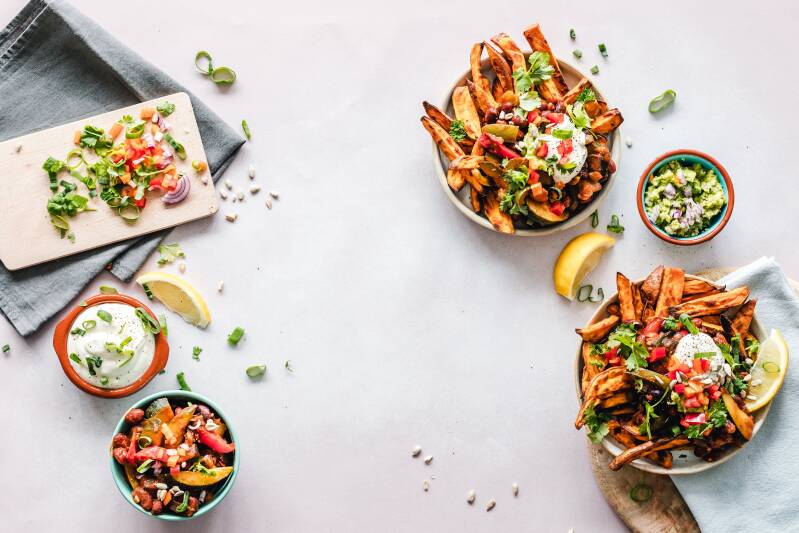
“The audience internalizes effortlessness as the norm, training expectations that cannot exist in real kitchens.”
This sentence exposes one of the quietest but most corrosive failures of contemporary food media.
Over the past decade, food content has perfected a language of ease. Recipes are framed as quick wins. Techniques are reduced to gestures. Complexity is edited out in favor of flow. The camera never lingers long enough for doubt, fatigue, or correction to appear. What remains is a seamless narrative in which food seems to assemble itself.
Audiences do not merely consume this image of cooking. They absorb it. Repeated exposure reshapes expectation. Effortlessness becomes the standard against which all cooking is measured. Anything slower, messier, or more demanding begins to feel like a deviation — or worse, a personal inadequacy.
This is not an accident. It is an editorial choice.
How Food Lost Its Friction
Cooking has always been labor. Not just physical labor, but cognitive and emotional labor: attention, timing, judgment, repetition. Historically, food writing and cooking culture acknowledged this openly. Difficulty was not framed as failure, but as a marker of seriousness.
Today, friction is treated as a problem to be solved, not a reality to be understood.
The language reveals it. “Just.” “Simply.” “Quick.” “No-fail.” These words flatten experience. They erase the learning curve. They suggest that good cooking is a matter of following instructions rather than developing perception.
Visually, the same erasure occurs. Jump cuts compress time. Errors disappear. Mise en place is pre-arranged, not achieved. The labor remains — but it is hidden, stylized, and sanitized.
This does not make cooking more accessible. It makes it abstract.
The Psychological Effect on the Audience
When effort is removed from the narrative, it does not disappear from reality. It reappears as shame.
Viewers and readers attempt to replicate what they see. When the process feels harder than promised, the fault is internalized. I’m not skilled enough. I’m too slow. I’m doing it wrong.
This is the opposite of empowerment.
Instead of learning how cooking actually works, audiences learn to distrust their own experience. They become passive consumers of food imagery rather than confident participants in food culture.
Ironically, the more “approachable” the content claims to be, the more alienating it becomes.
Effortlessness as Ideology
Effortlessness is not neutral. It reflects a broader cultural discomfort with labor — especially labor that cannot be optimized, scaled, or aestheticized.
In food media, effortlessness implies that:
-
mastery is innate rather than learned
-
speed is superior to understanding
-
outcome matters more than process
This ideology devalues craft. It also devalues the people who practice it — cooks, chefs, artisans, and serious home cooks whose work is defined by repetition, failure, and refinement.
When effort is invisible, respect disappears with it.
What This Means for Publishers and Brands
From a business perspective, the consequences are long-term and structural.
Content built on illusion creates short-term engagement but weak loyalty. It attracts attention but not trust. Readers consume, but they do not return with conviction.
Conversion — real conversion — is not a click or a save. It is a decision: to follow, to subscribe, to cook, to buy, to believe.
And belief requires credibility.
Audiences are more sophisticated than metrics suggest. They recognize when they are being sold an image rather than offered understanding. Over time, they disengage — not loudly, but permanently.
Reclaiming Effort as Value
The solution is not to make food content harder, slower, or academic. It is to restore effort to its rightful place — not as a barrier, but as meaning.
Effort explains why flavor matters.
Effort gives context to technique.
Effort turns cooking from performance into practice.
When content acknowledges work, it creates permission: to fail, to learn, to improve. It builds trust by aligning representation with reality.
This is where authority lives — not in perfection, but in interpretation.
A Different Editorial Responsibility
Food media has influence. It shapes not only taste, but expectation, confidence, and behavior. With that influence comes responsibility.
The task now is not to simplify food further, but to translate complexity without denying it. To make work visible without turning it into spectacle. To respect the intelligence of the audience rather than manage it.
Effortlessness is easy to sell.
Craft takes courage to show.
But only one of them endures.
The Future of Food Content
The food content that will matter in the coming years will not be louder or faster. It will be clearer. More deliberate. More honest.
It will understand that real kitchens are imperfect, demanding, and deeply human — and that this is precisely where their power lies.
Because when audiences are taught that effort is normal, achievable, and meaningful, they do not disengage.
They lean in.
Image sourced by Unsplash