By now, you understand that Culinary IP isn’t just recipes or menus—it’s a system of decisions, intent, and value that lives underneath everything you create. Today, we’re taking it from theory to practice. We’re going to map a full dish, showing how every choice becomes part of a repeatable, transferable, and profitable system.
Let’s look at beef bourguignon. On paper, it might seem simple: sear beef, cook in wine with vegetables, simmer until tender. But for Culinary IP, what matters are the decisions invisible to most people, the ones that turn a dish from a memory into a system.

Step 1: Ingredients as Intent
Every ingredient isn’t just a flavor—it’s a decision. What cut of beef will give tenderness without excess fat? Which wine complements the meat while aligning with your kitchen’s style and cost structure? Should carrots be cut in a precise size for consistency? Even choices like thyme vs. rosemary or fresh vs. dried bay leaves carry impact—not just on flavor, but on the reproducibility, cost, and experience. In Culinary IP, every ingredient is documented with intent, not just listed.
Step 2: Technique and Timing
Searing beef isn’t just about browning—it’s about Maillard reaction, texture, moisture retention, and aroma. The order in which vegetables are added controls flavor layering. Simmering time is critical—not only for tenderness, but to ensure the sauce reaches the right concentration, thickness, and gloss. In a standard recipe, these steps are often written loosely: “cook until tender.” In Culinary IP, each timing, temperature, and motion is explicitly mapped so that anyone can execute the dish consistently without relying on intuition.
Step 3: Sequencing for Experience
Culinary IP considers how the dish travels beyond the kitchen. Does the sauce finish at the right time for service? Does the plating support brand perception? Could a sous-vide approach be implemented for consistency across multiple locations without losing quality? By sequencing with purpose, the dish becomes transferable, reproducible, and predictable in both execution and guest perception.
Step 4: Margin and Menu Strategy
Every dish interacts with your business ecosystem. Beef bourguignon might have higher labor and ingredient costs, so the portion size, plating, and menu price must reflect its value while maintaining profitability. Culinary IP doesn’t just map the culinary technique—it connects it to business outcomes: cost control, menu flow, positioning, and guest experience.
Step 5: Content and Reuse
Once structured, the same dish can travel through multiple channels. A step-by-step article for your website, an Instagram post, a magazine feature, or a menu description all rely on the same decisions you’ve documented. Each representation retains the essence, the intention, and the commercial logic. That’s why Culinary IP is systemic and durable, not just creative output.
When you map a recipe this way, you move beyond memory and instinct. You create a system that anyone in your kitchen—or anyone working with your brand—can execute and scale. Every decision, from ingredient selection to final plating, becomes explicit. Your recipes, menus, and content no longer rely solely on you—they perform independently while staying true to your intent.

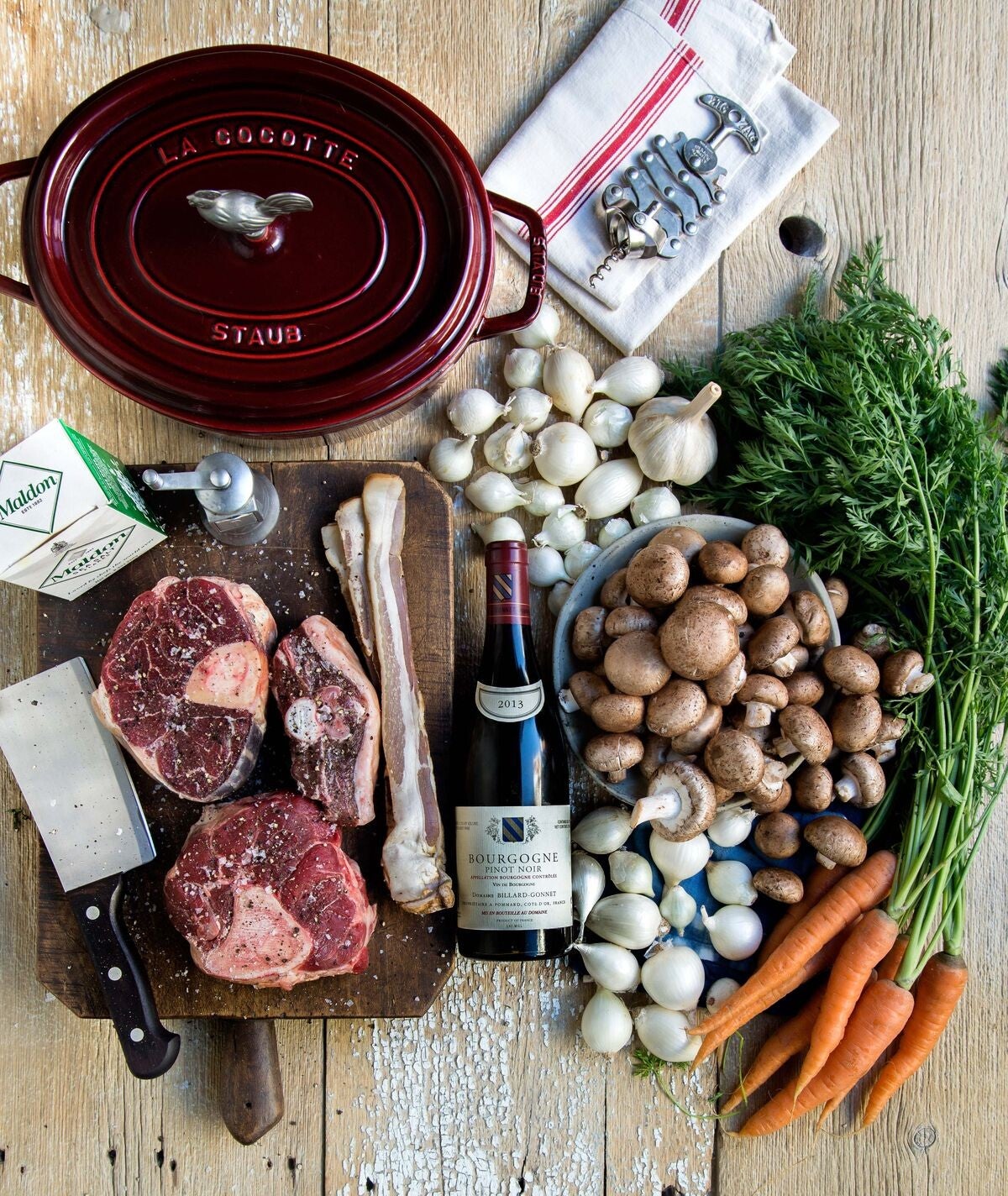
Example of structured mapping for beef bourguignon:
-
Beef cut: chuck, 1kg, trimmed of fat, cubed 3cm
-
Wine: Burgundy, 750ml, for braising, cost per portion $2
-
Searing: 180°C pan, 3 minutes per side, avoid overcrowding
-
Vegetables: onion 50g, carrot 40g, cut uniform; added at minute 5 of simmer
-
Simmer: 2 hours, 85°C, covered, stir every 20 minutes
-
Sauce: reduce 20 minutes after meat tender, finish with butter 20g
-
Plating: 250g per portion, garnish parsley 1g, ceramic plate 25cm diameter
-
Menu strategy: premium dish, positions brand as classic French, price $28
Every line is a decision mapped, not just an instruction. That’s the difference between recipes as memory and recipes as a system.
By the end of this lesson, you should begin to see your own recipes in a new light. Every dish carries potential—untapped decisions, opportunities to improve consistency, profit, and guest experience. This is the essence of Culinary IP in practice.